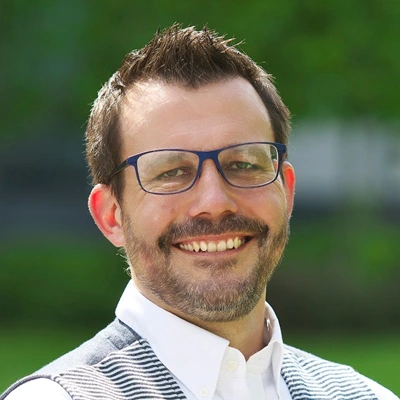
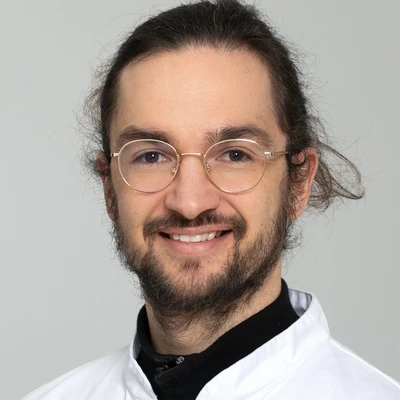
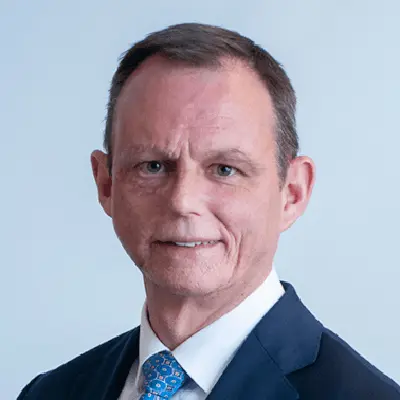
Leads technology- and data-driven research in protein science, antibody engineering, AI-based systems biology, and precision medicine.
The Human Protein Atlas
Coffee Break
Towards Spatial Resolution of (Patho)physiology at Single Cell Level – Heterogeneity & Evolution
Chairs: Seddik Hammad, Maria Fedorova
Itay Tirosh (Rehovot, Israel)
Principal Investigator
Pioneered single-cell RNA-seq of tumours; combines computational and spatial methods to dissect cellular diversity in glioma and head-and-neck cancers.
Spatial organization of cell states in glioma and in head & neck cancer
Aimée Bugler-Lamb (Ghent, Belgium)
Senior Postdoctoral Researcher, Guilliams Lab
Deciphers the causal circuits underlying Kupffer cell identity and function via an integrated pipeline combining in vivo screening with Perturb-seq.
Combining in Vivo CRISPR Screens with Computational Modeling to Identify the Causal Circuits Driving Kupffer Cell Identity and Function
Johanna Huber (Mannheim, Germany)Metabolic Fingerprinting at the Cellular Level by MALDI Mass Spectrometry Imaging
Christoph Harmel (Basel, Switzerland)Mechanistic Organoid Representations
Erwin Schoof (Kgs. Lyngby, Denmark)
Professor of Single-Cell Proteomics in Disease Biology
Heads the Cell Diversity Lab, developing high-sensitivity proteomics workflows to decipher cellular heterogeneity in normal and malignant hematopoiesis.
Characterising complex cell hierarchies with single-cell proteomics
1st Poster Session and Welcome Reception
Tuesday, 5. May
Cellular Scale – Integrating Signal Transduction & Metabolism for cell fate decisions
Chairs: Ursula Klingmüller, Ralf Steuer
Christiane Opitz (Heidelberg, Germany)
Head of Division "Metabolic Crosstalk in Cancer"
Investigates tryptophan catabolism and aryl hydrocarbon receptor signalling to understand how metabolism regulates tumour biology and anti-tumour immunity.
Integrating Signal Transduction and Metabolism
Nikolaos Meimetis (Cambridge, USA)Interactome-based deep learning and path-level decomposition reveal TGFβ-IFNα competition in MASH
Evangelia Petsalaki (Hinxton, UK)
Group Leader, Whole Cell Signalling Group
Builds data-driven and AI approaches to model cell signalling networks and construct Digital Twins of cellular systems across disease contexts.
From data to digital twins of biological systems: Network-based approaches to study context-specific cell signalling
Stein-Erik Gullaksen (Bergen, Norway)Single cell immune and phospho-signaling profiling for response prediction in chronic myeloid leukemia
Katsuyuki Yugi (Tokyo, Japan)
Team Leader, Laboratory for Integrated Cellular Systems
Develops trans-omics approaches that integrate metabolism, signalling, and mathematical modelling to understand systems-level cellular behaviour.
Systems pharmacology of metformin action in the liver
Coffee Break
Artificial Intelligence – Reasoning models in Systems Biology and E-HEALTH
Chairs: Andreas Raue, Stefan Höhme
Jan Hasenauer (Bonn, Germany)
Professor of Computational Life Science
Develops data-driven modelling methods for biological processes and scalable software tools for simulation and parameter estimation.
AI-supported Analysis of Longitudinal Health Data
Marija Cvijovic (Gothenburg, Sweden)
Professor of Computational Biology
Develops computational platforms integrating large-scale biological data to uncover the mechanisms behind ageing and longevity.
What doesn’t kill you makes you older: synergistic effects of damage accumulation, nutrient signalling and metabolism in the context of cellular rejuvenation and health span
Lunch Break
2nd Poster Session
Artificial Intelligence continued – Pattern Recognition for Pathophysiology Prediction
Chairs: Andreas Raue, Stefan Höhme
Alexander Skupin (Esch-sur-Alzette, Luxembourg)
Professor for Integration and Modelling of Biomedical Data
Heads the Integrative Cell Signalling group, combining single-cell microscopy, bioinformatics, and biophysics to investigate neurodegenerative brain disorders.
Systems Biology of Parkinson’s disease
Xuechun Xu (Stockholm, Sweden)A hybrid recurrent dynamical model of cancer cell metabolism predicts metabolic state transitions and drug responses
Álvaro Martins (Porto, Portugal)Unveiling the molecular cargo of cancer-derived extracellular vesicles
Digital Twins
Chairs: Dirk Drasdo, Johannes Bode
Stefan Höhme (Leipzig, Germany)
Group Leader, Image Analysis and Multiscale Tissue Modeling, IZBI
Builds spatio-temporal multi-scale 3D models of liver tissue, with algorithms for generating virtual tissues including detailed vascular structures, and AI-based image analysis.
Towards 3D multiscale liver disease models for clinical practice
Paul Macklin (Bloomington, USA)
Associate Professor of Intelligent Systems Engineering
Builds open-source simulation tools (PhysiCell, BioFVM) for multicellular systems biology, with a focus on cancer immunology and digital twins.
Rapid simulation model development for virtual tissue laboratories and digital twins
Coffee Break
Lukas Neckermann (Mannheim, Germany)Trajectory-Based Modeling of Injury-to-Recovery Cell States Reveals Metabolic Reprogramming and Early Prognosis in ACLF
Lutz Brusch & Prerana Chandratre (Dresden, Germany)Collaborative Modeling and Simulation of Multiscale Disease Processes using Morpheus
Adil Mardinoglu (London, UK)
Professor of Systems Biology
Develops treatment strategies for metabolic and neurodegenerative diseases and cancers, blending multi-omics, AI, and experimental biology with drug development.
Human Metabologenomics for Integration of Multi-Omics Data
Short Break
Panel Discussion/Interactive SessionPotential and Challenges in E-HEALTH – New Frontiers from an international perspective
Networking Dinner
Wednesday, 6. May
E-Health – Translation into Clinical Practice
Chairs: Steven Olde-Damink, Heike Bantel, Frank Lammert
Foad Rouhani (London, UK)
Group Leader, Tissue Regeneration and Clonal Evolution (TRCE) Laboratory
Investigates the biological mechanisms underlying organ regeneration; focus on the role of somatic mosaicism in tissue homeostasis and response to injury.
Somatic mosaicism in human tissues
Jens Kleesiek (Essen, Germany)
Director, Institute for Artificial Intelligence in Medicine (IKIM)
Recognises clinically relevant patterns in medical data and integrates multimodal information to improve decision-making at the point of care.
From Data to Actions: Operationalizing Clinical AI
Florian Markowetz (Cambridge, UK)
Professor of Computational Oncology
Applies computational methods to cancer research; co-founder and director of Tailor Bio, a pancancer precision medicine start-up.
All models are wrong and yours are useless – how to make clinical prediction models impactful for patients
Agustin Rodriguez Gonzalez & Nantia Leonidou (Heidelberg, Germany)Development of a ML-informed ODE Model as Clinical Decision Support System (CDSS) to Personalize Anemia Treatment in Chronic Kidney Disease Patients
Ignacy Rzagalinski (Dresden, Germany)Absolute quantification of apolipoproteins in human liver and plasma
Coffee Break
Ana Ramírez de Molina (Madrid, Spain)ALIBIRD mHealth Platform in cancer care: prospective pilot study in NSCLC patients
Lorenz Adlung (Hamburg, Germany)
Junior Group Leader
Combines multi-omics, functional experiments, and mathematical modelling to study metabolic and inflammatory diseases.
From integrative omics to a phase IIa clinical trial in liver disease
Keynote Lecture 2: Wolfram Goessling (New Haven, USA)
Robert H. Ebert Professor of Medicine
Oncologist and gastroenterologist investigating the molecular signals that regulate liver development, regeneration, and cancer using zebrafish and other model systems.